7 Tips for a Successful Interior Commercial Renovation Project
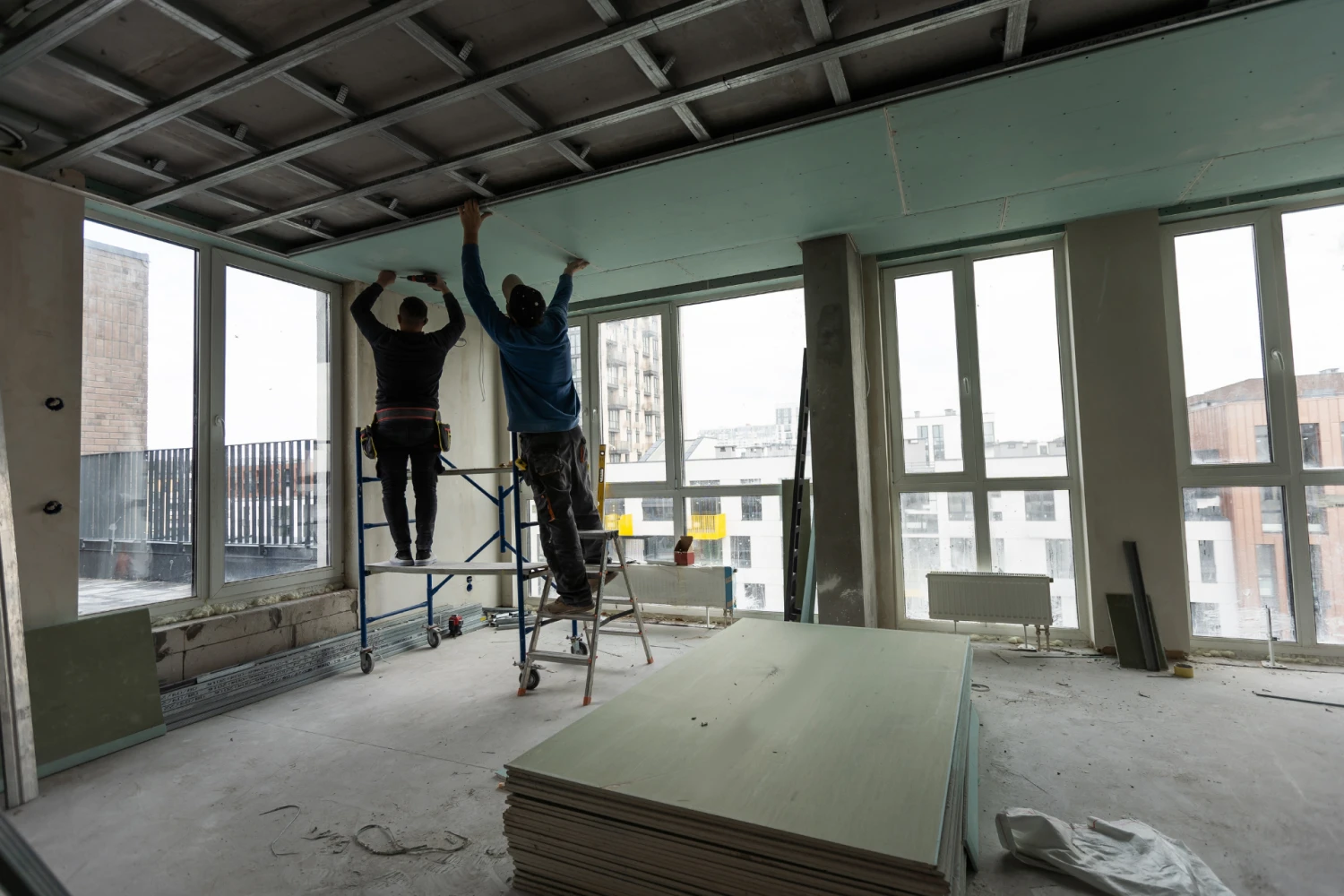
To achieve a successful commercial renovation project, you need to define clear goals, set a realistic budget, work with the right contractors, follow code requirements, prioritize functionality, use sustainable materials, and carefully plan the whole process.
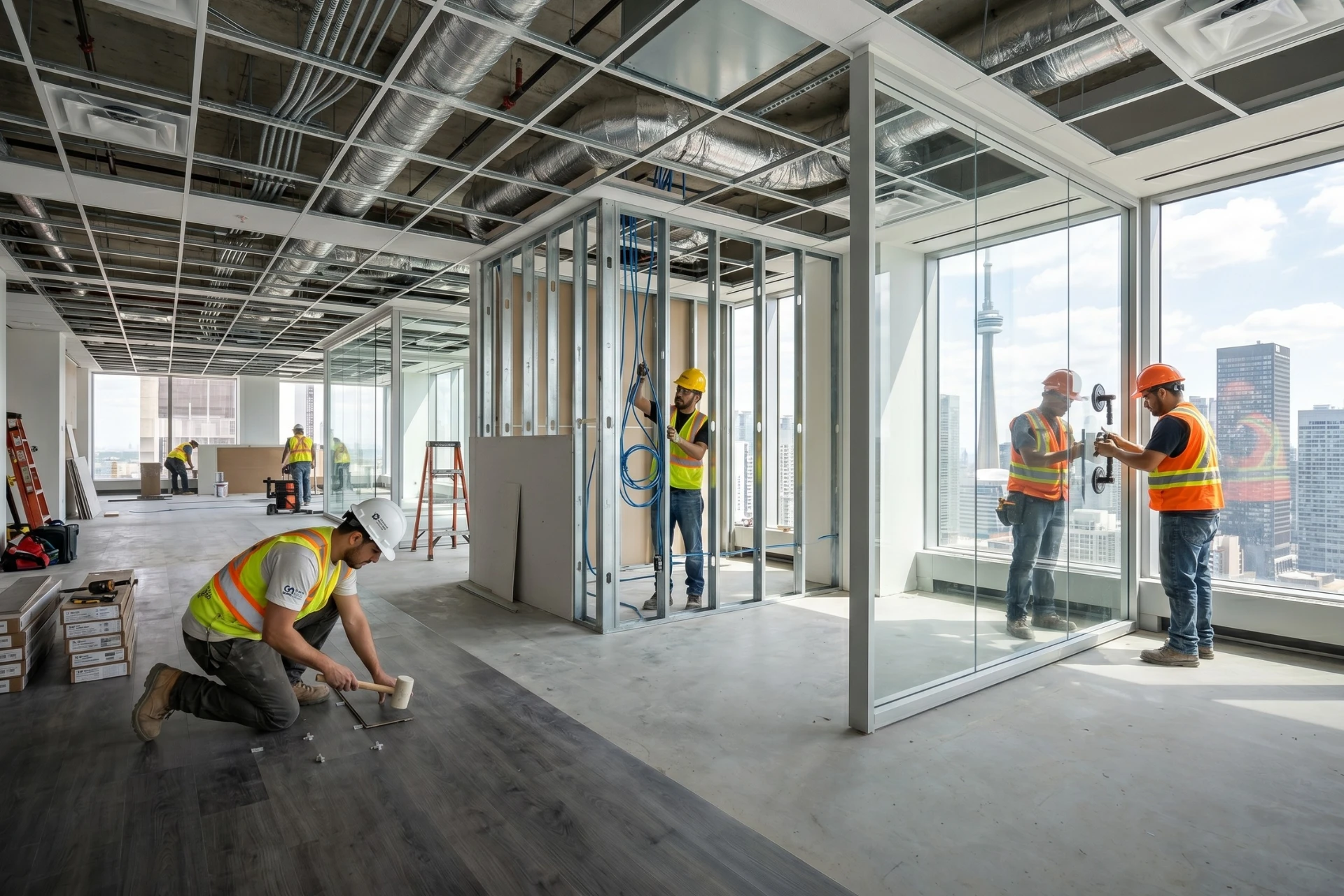
A well-designed commercial space isn’t just for show. The interior design and layout of your physical establishment directly affect your day-to-day business operations. A modern, functional space empowers your team and reinforces brand identity, shaping the overall experience your business delivers.
Interior commercial renovation is a significant investment, and one misstep can lead to issues. To ensure success, start with these seven practical tips tailored to your business needs.
Tip 1: Define Your Goals
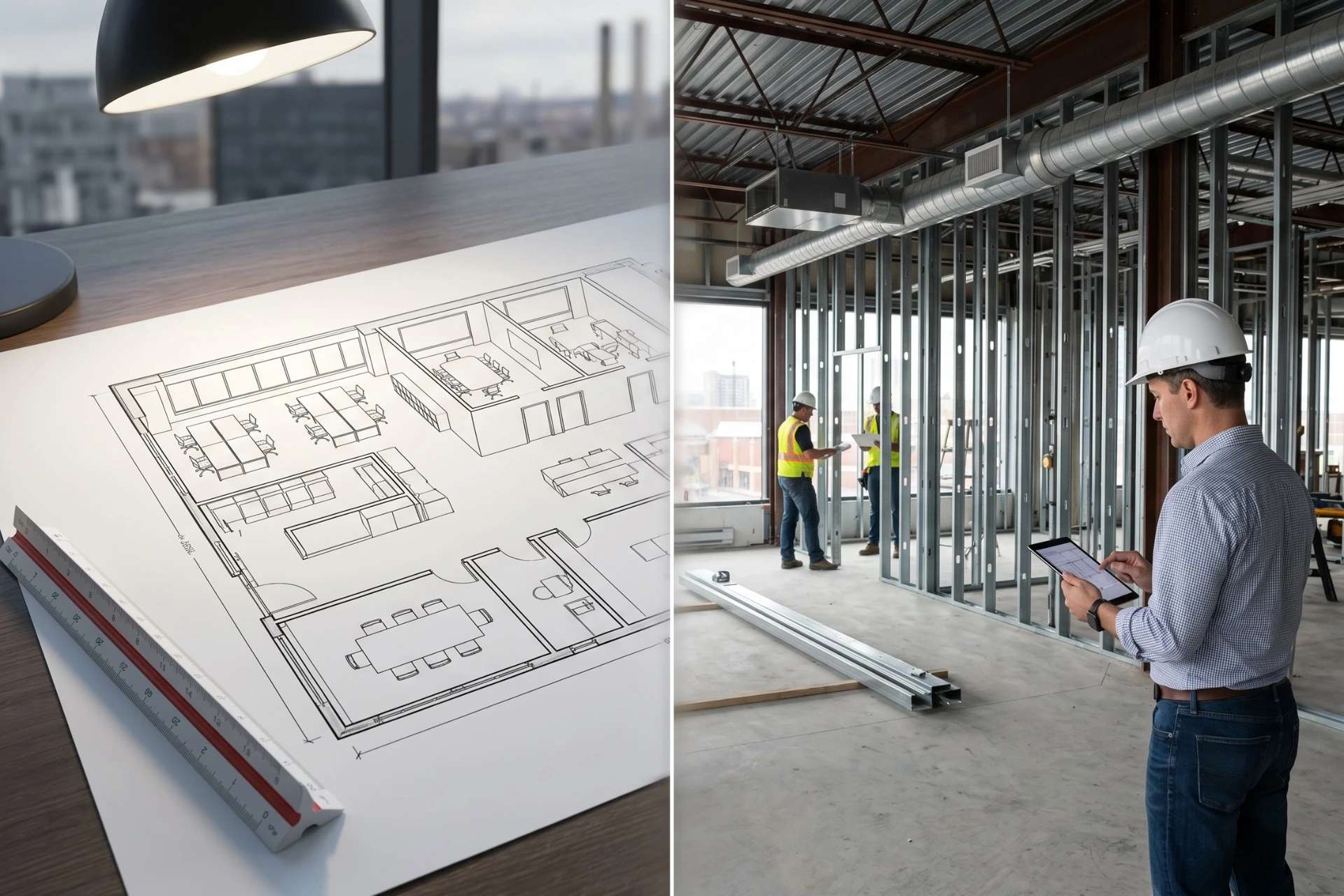
Without proper planning, commercial renovations can fail before construction even starts. The lack of detailed layout and design requirements can lead to scope creep, budget overruns, and delays in turnover.
To ensure success from the beginning, your team needs to define what a successful design-build project looks like. Anchor your renovation goals to your business needs and clarify what your space needs to do better after the construction process.
Here are some clear, explicit outcomes to work toward:
- For warehouses: Increase warehouse throughput without expanding square footage
- For office builds: Improve staff circulation and safety in high-traffic areas
- For franchises: Upgrade interiors to meet franchise or regulatory standards
- For retail builds: Reconfigure layouts to support growth or new equipment
Additionally, consider downtime tolerance, operating hours, and phased construction needs, among other constraints, early. Plan for them accordingly to see accurate results.
Tip 2: Budget Wisely
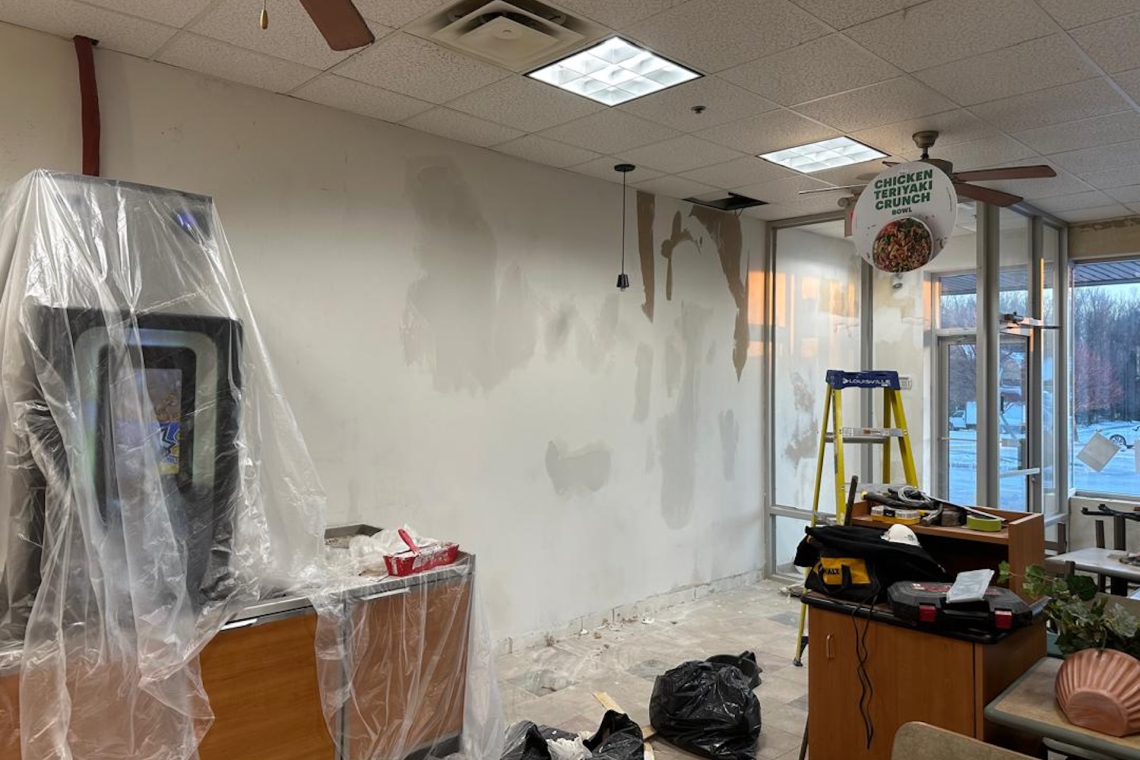
When estimating costs for a renovation project, allocate resources based on their importance. Prioritize mechanical, electrical, and plumbing upgrades.
- Focus on systems impacting operations like HVAC and safety, and include a 10% to 20% contingency buffer.
- Consider soft costs like permits and inspections, as they can add up quickly.
- Plan for finishes, fixtures, floor tiles, and branding elements toward the end of the design process.
Tip 3: Choose the Right Team
The lowest bid isn’t always the best option when selecting commercial renovation contractors. Look for professionals with experience in renovating occupied spaces. They should understand phased construction and coordinate trades smoothly.
A team is qualified to handle your construction project if they:
- have a clear scope of breakdowns and trade sequencing
- offer in-house project management and site supervision
- understand local building codes and permits
- can document safety protocols and compliance processes
- share realistic timelines with phased construction planning
- give transparent pricing with minimal reliance on allowances
Tip 4: Understand Local Regulations
Before finalizing a design, ensure it meets local regulations, including zoning bylaws on use types, occupancy limits, and parking. Non-compliance can lead to fines and legal issues.
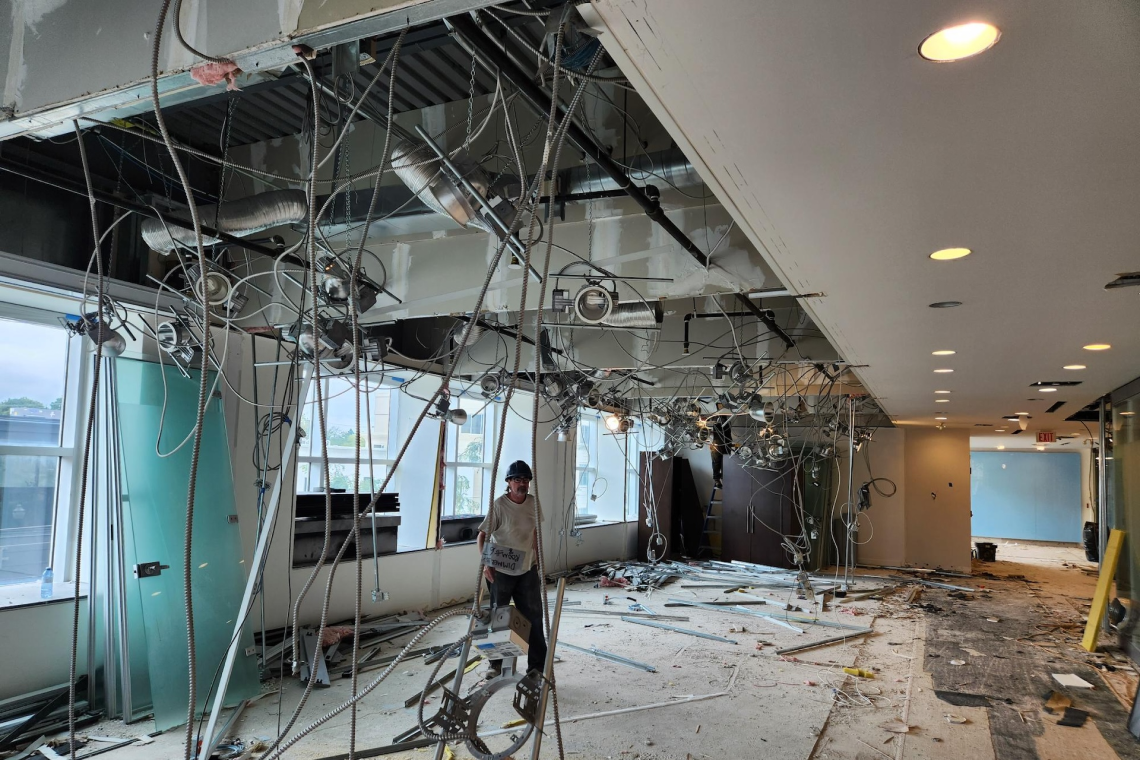
Secure your building permit early to align it with your construction scope. For interior renovations, you’ll need to obtain permits for the following:
- structural changes
- power upgrades
- HVAC modifications.
Likewise, health, accessibility, and fire codes may apply, depending on your industry.
Tip 5: Prioritize Functionality
An efficient space supports daily workflows, while poor adjacency planning can lead to bottlenecks.
Here are some ways to address the functional needs of your commercial space:
- Strategically map your equipment to reduce unnecessary walking between frequent tasks.
- Use suitable lighting for your team to work efficiently.
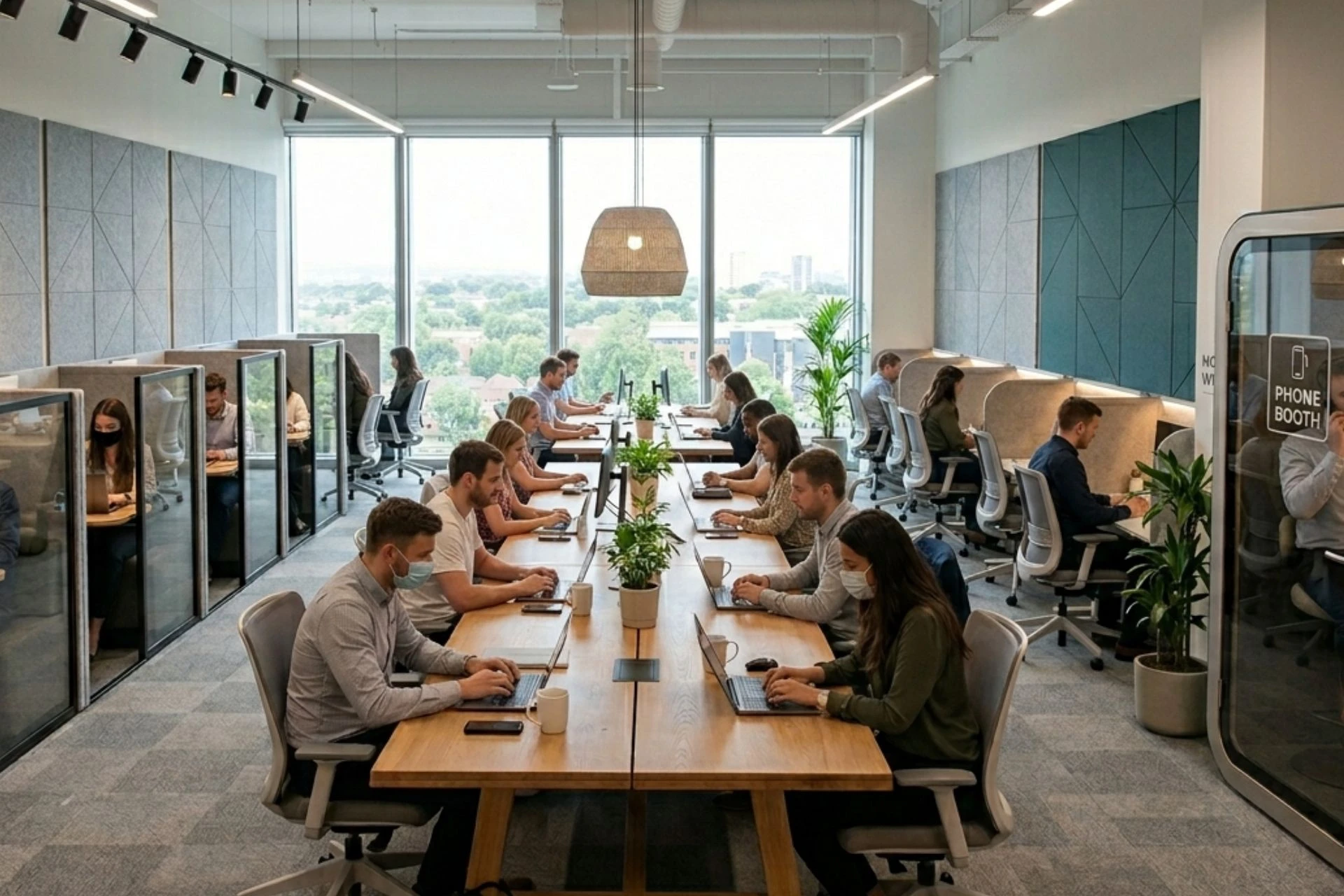
- Control office noise levels through space planning and acoustic finishes.
- Allocate adequate space for break areas, washrooms, and support spaces to handle peak hours.
- Create ergonomic workstations and reach zones to prevent strain injuries.
- Create a distraction-free environment to minimize cognitive load for employees.
Tip 6: Embrace Sustainable Practices
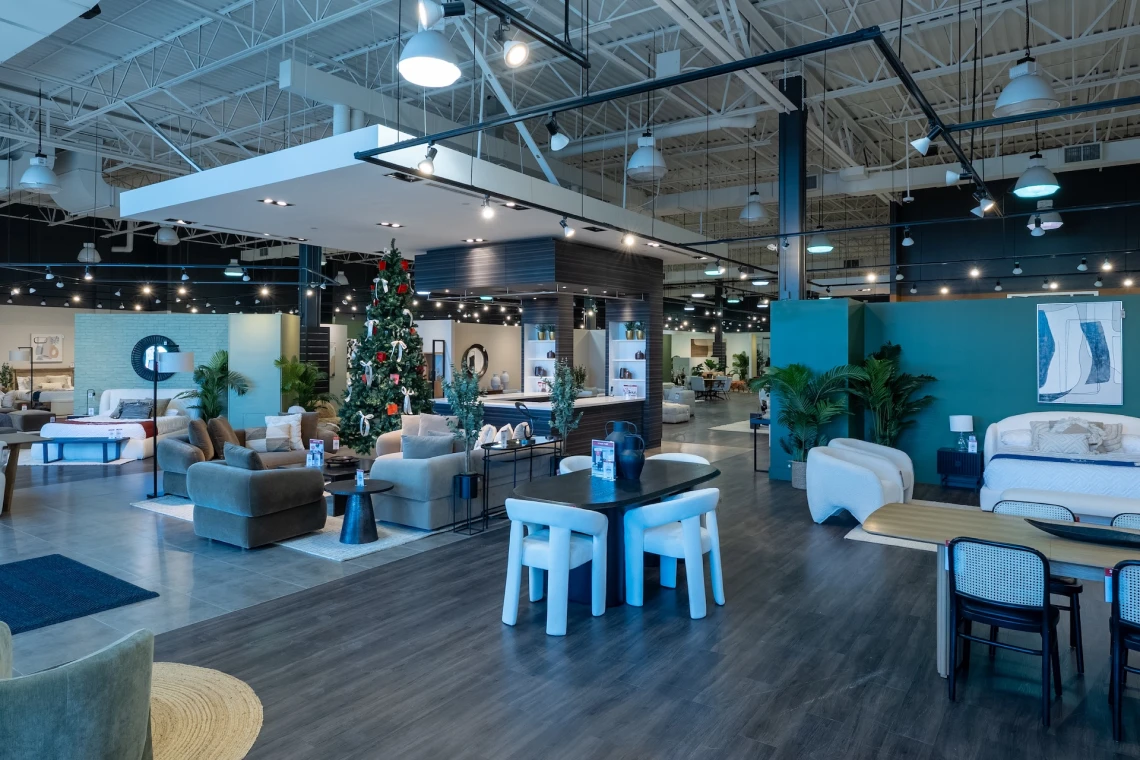
Using sustainable materials not only benefits the environment but also lowers long-term maintenance costs with durable finishes.
Low-VOC paints, adhesives, and sealants release fewer chemicals, allowing for a shorter re-occupancy time after construction.
Here are some sustainable choices that you can apply to your commercial building:
- Use LED lighting paired with occupancy sensors to reduce energy use in low-traffic areas.
- Size your HVAC according to your daily usage to eliminate outdated load assumptions.
- Use improved insulation and air sealing to reduce heating and cooling losses year-round.
- Get high-efficiency equipment that minimizes strain on electrical systems and removes the need for future upgrades.
- Evaluate energy-efficient design decisions against payback periods instead of just their upfront costs to see long-term benefits.
Tip 7: Plan Carefully for a Smooth Timeline
Break the renovation into phases like demolition and finishes, then link milestones to permit approvals and inspections.
Failed or delayed inspections can disrupt schedules, so plan for them. Align material lead times with construction phases to prevent idle labor.
In Summary
- Interior commercial renovation impacts business operations, not just appearance.
- Set clear, definitive goals with your contractors to prevent scope creep and budget overruns.
- Mechanical, electrical, plumbing, and compliance costs will make up the bulk of your total project cost.
- Hire contractors like HI-Performance Construction for phased construction and permit coordination
- Functional layouts enhance workflow and efficiency over cosmetic upgrades.
- Sustainable materials lower costs and speed re-occupancy.
Build a Commercial Space and Elevate Your Business Space
For a partner who gets how interior commercial renovation affects operations and growth, choose HI-Performance Construction. We handle everything from drawings to build-out, ensuring you can confidently hand off your project.
Take the first step to a successful commercial build. Call us to schedule an initial consultation today, and let’s brainstorm some ideas to start.