How Tenant Improvement Allowances Work in Ontario
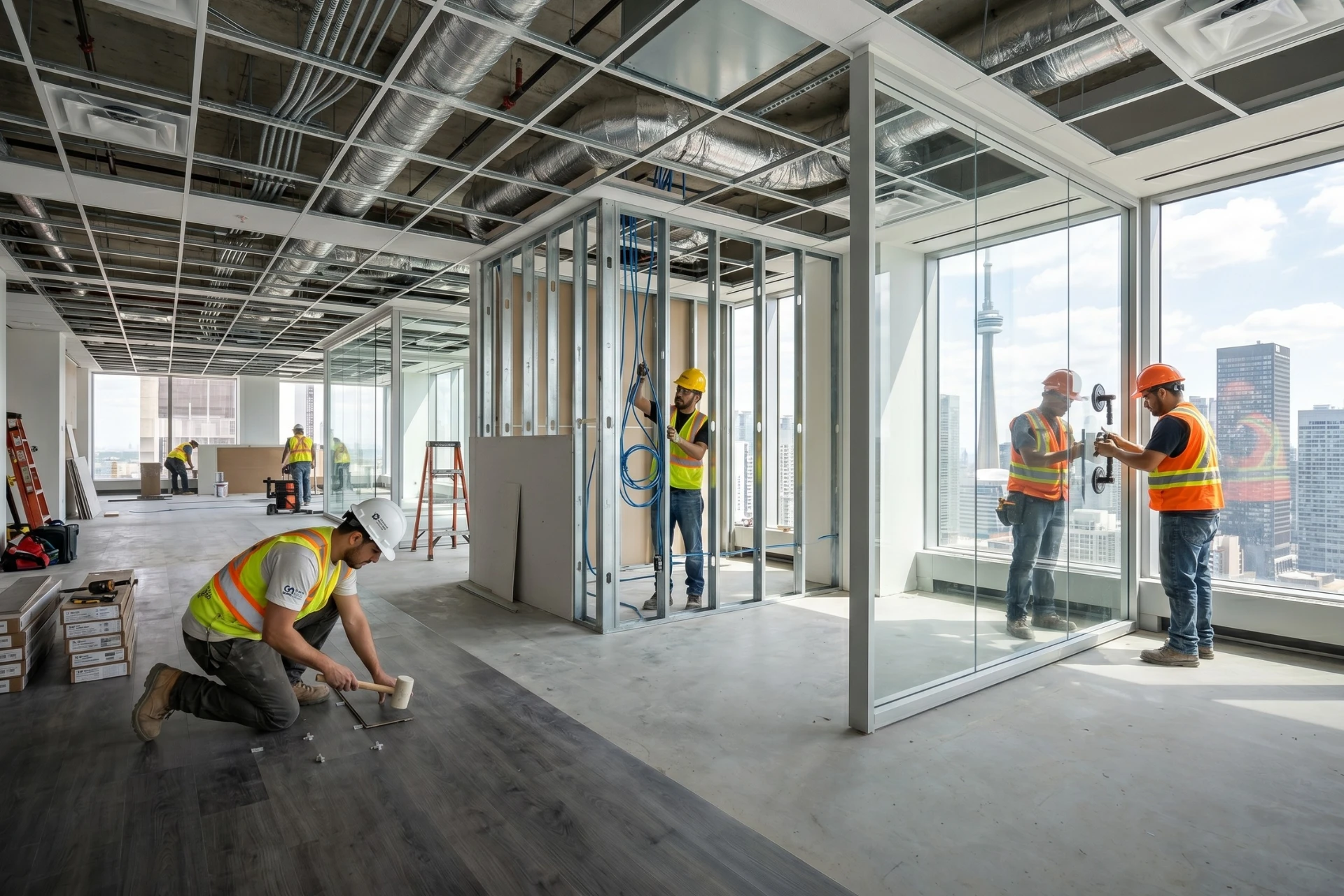
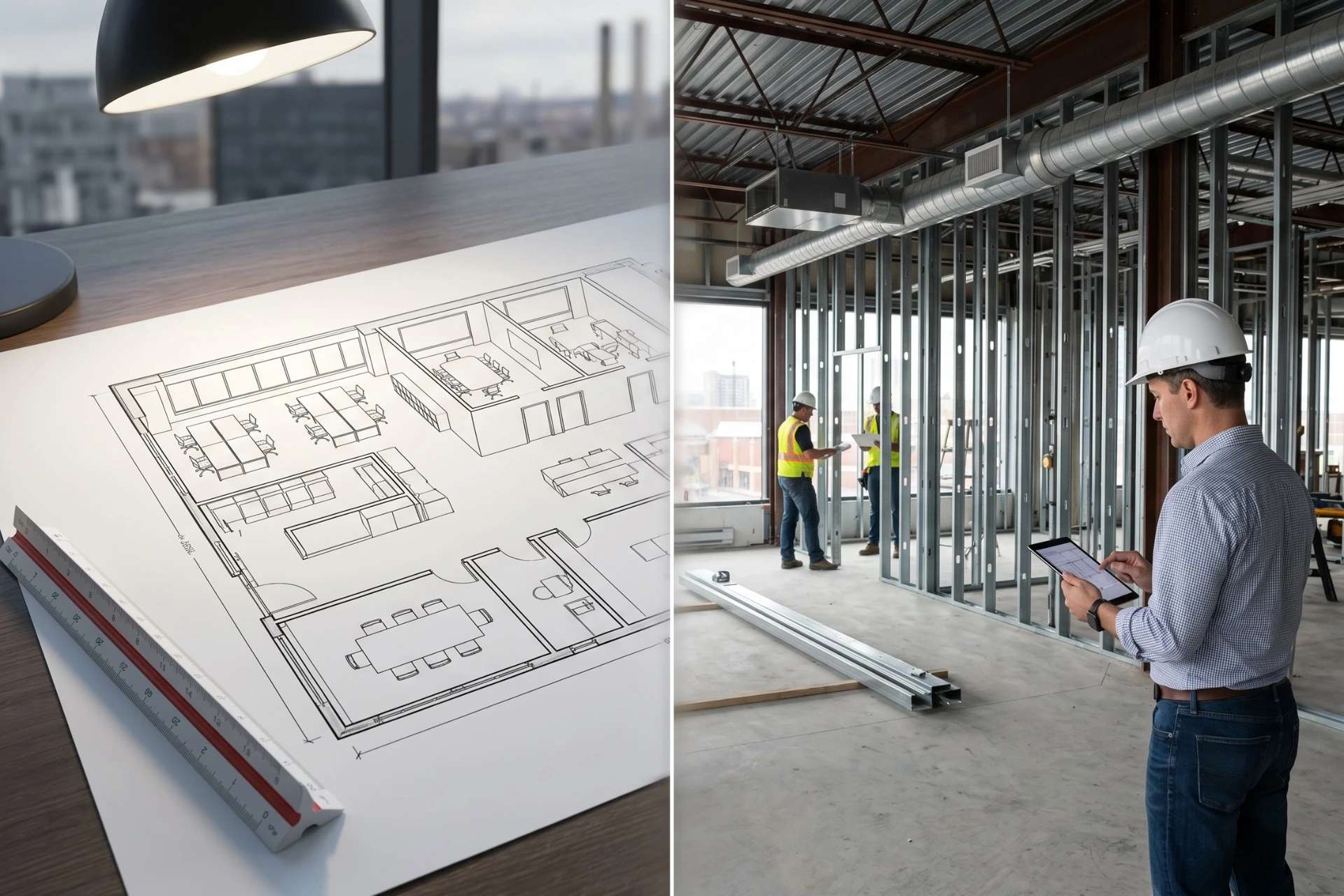
Landlords provide tenant improvement allowances to offset construction costs during a commercial lease's initial fit-out. In Ontario, these funds typically cover HVAC, electrical work, framing, and interior finishes, letting tenants minimize their upfront investment before launching operations.
When you sign a lease on a commercial property in Ontario, the space you're taking on rarely looks the way you need it to. Walls are in the wrong place. Electrical systems are undersized. The layout was built for someone else's business.
Bridging that gap costs money, and how it’s split between landlord and tenant is where the tenant improvement (TI) allowance comes in.
Understanding how a TI allowance works puts you in a stronger position during lease negotiations, just as HI-Performance Construction does with tenants before they sign.
What’s a Tenant Improvement Allowance?
A tenant improvement allowance (TIA), also called a lease improvement allowance, is money a landlord contributes toward customizing the leased space. It's typically structured as a per-square-foot amount, a fixed dollar total, or a percentage of improvement costs.
For commercial tenant improvement projects in the GTA, allowances typically range from $15 to $60 per square foot: a Class A downtown deal with a strong tenant on a longer term can land at $40 to $60, while a Class B suburban space on a shorter term is more likely to fall between $15 and $30.
Landlords treat these as capital improvements: permanent upgrades funded through the TIA become theirs at lease end and function as a lease incentive that helps attract quality tenants by offsetting their upfront construction costs.
Tenant Improvements vs. Leasehold Improvements: What's the Difference?
Tenant improvements are customizations made to a commercial rental to meet a new business's operational needs. Common examples include new partitions, lighting, millwork, flooring, or upgraded electrical and HVAC systems.
Leasehold improvements is a comprehensive legal and accounting classification for any lasting modification made to a commercial rental. While tenant improvements fall under this category, the defining characteristic is longevity: items that are integrated into the structure itself are considered leasehold improvements, which benefit the landlord and future tenants.
Some leases let tenants remove them, but only if the space is restored to its original condition. When a landlord funds this work, it's sometimes called a leasehold improvement allowance rather than a TI allowance, though both describe the same contribution.
Trade fixtures, items a tenant installs for business purposes that can be removed without damaging the property, typically remain the tenant's property.
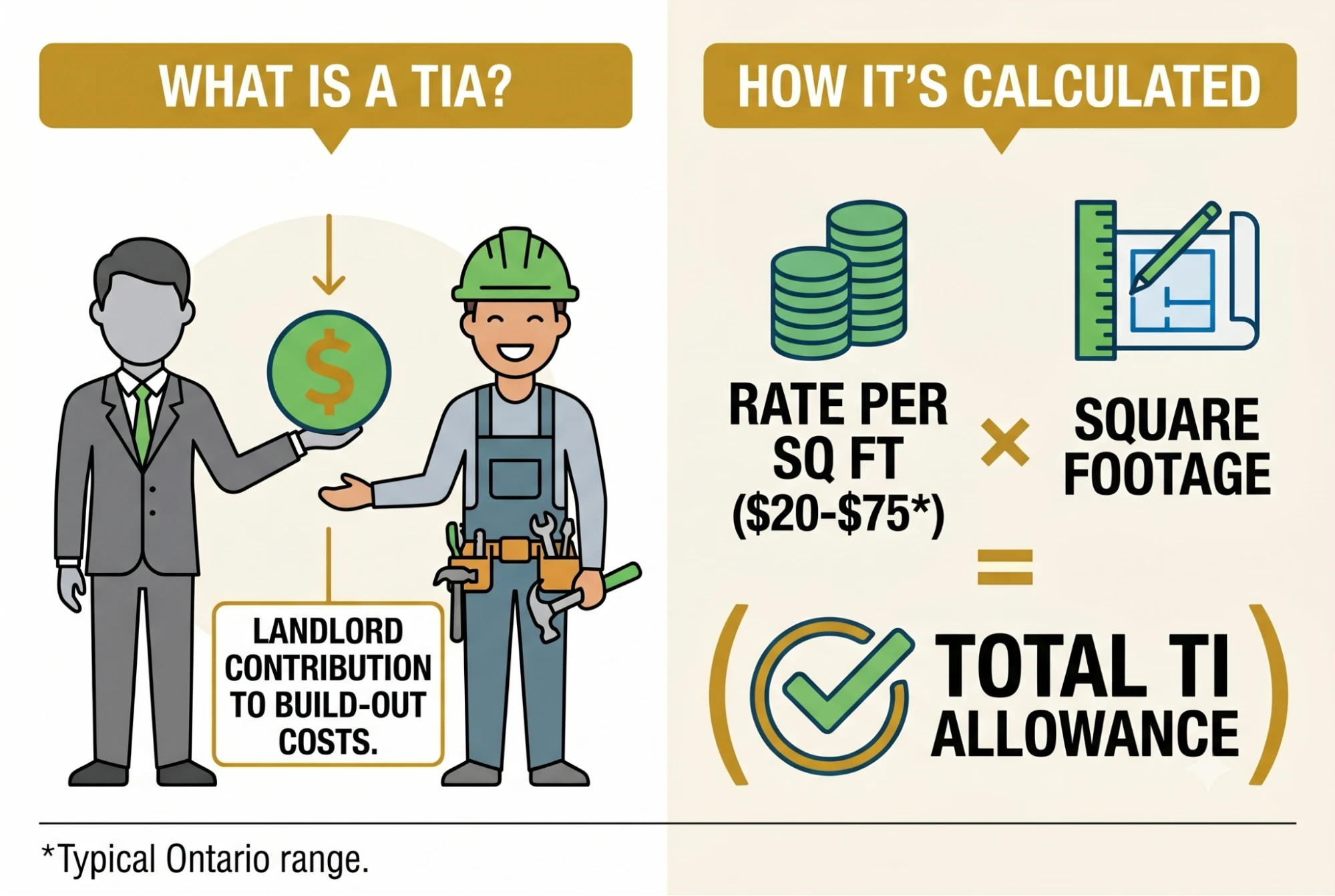
Image Source: Gemini 2026
How to Calculate Tenant Improvement Allowance
Calculating your TIA starts with the per-square-foot figure negotiated in your lease.
If your space is 3,000 sq ft and the landlord offers $35/sq ft, your total TIA is $105,000. That’s your working budget before your own capital comes in.
From there, the calculation shifts to your construction scope. A contractor’s build-out estimate covers hard costs such as framing, flooring, HVAC, electrical, and plumbing systems, plus soft costs such as architectural drawings and permits.
If the build-out comes in at $140,000, you cover the $35,000 gap. Come in under the allowance, and unused funds generally revert to the landlord: the TIA is not a cash bonus for the tenant.
Do You Have to Pay Back a Tenant Improvement Allowance?
In most cases, no.
A TIA isn’t a loan. It’s a landlord contribution toward preparing the space for your tenancy, not something tenants repay directly.
There’s an indirect cost, though. A landlord who offers a generous TI allowance will often offset it with a higher base rent over the lease term, so a lower allowance paired with a lower base rent may reduce your total rent expense, depending on your build-out scope. Model this carefully before you finalize your lease.
Some leases also include clawback provisions requiring partial repayment of the TIA if you vacate before the lease expires, so review your terms with legal counsel before signing.
What Construction Work Qualifies Under a TIA?
TI allowances are intended for permanent improvements to the leased space. Qualifying interior construction work typically includes:
- Partition walls and structural framing
- Flooring installation
- Ceiling work, including dropped ceilings and acoustic tile
- Electrical systems and lighting upgrades
- Plumbing modifications
- HVAC systems and mechanical distribution
- Painting and interior finishes
- Millwork and built-in cabinetry for meeting rooms
The improvement allowance generally does not cover furniture, equipment, inventory, security systems, signage, or moving costs, tenant-specific expenses that don't add long-term value to the property.
Some landlords exclude soft costs like architectural drawings and permits, so confirm what is in scope before finalizing your construction budget.
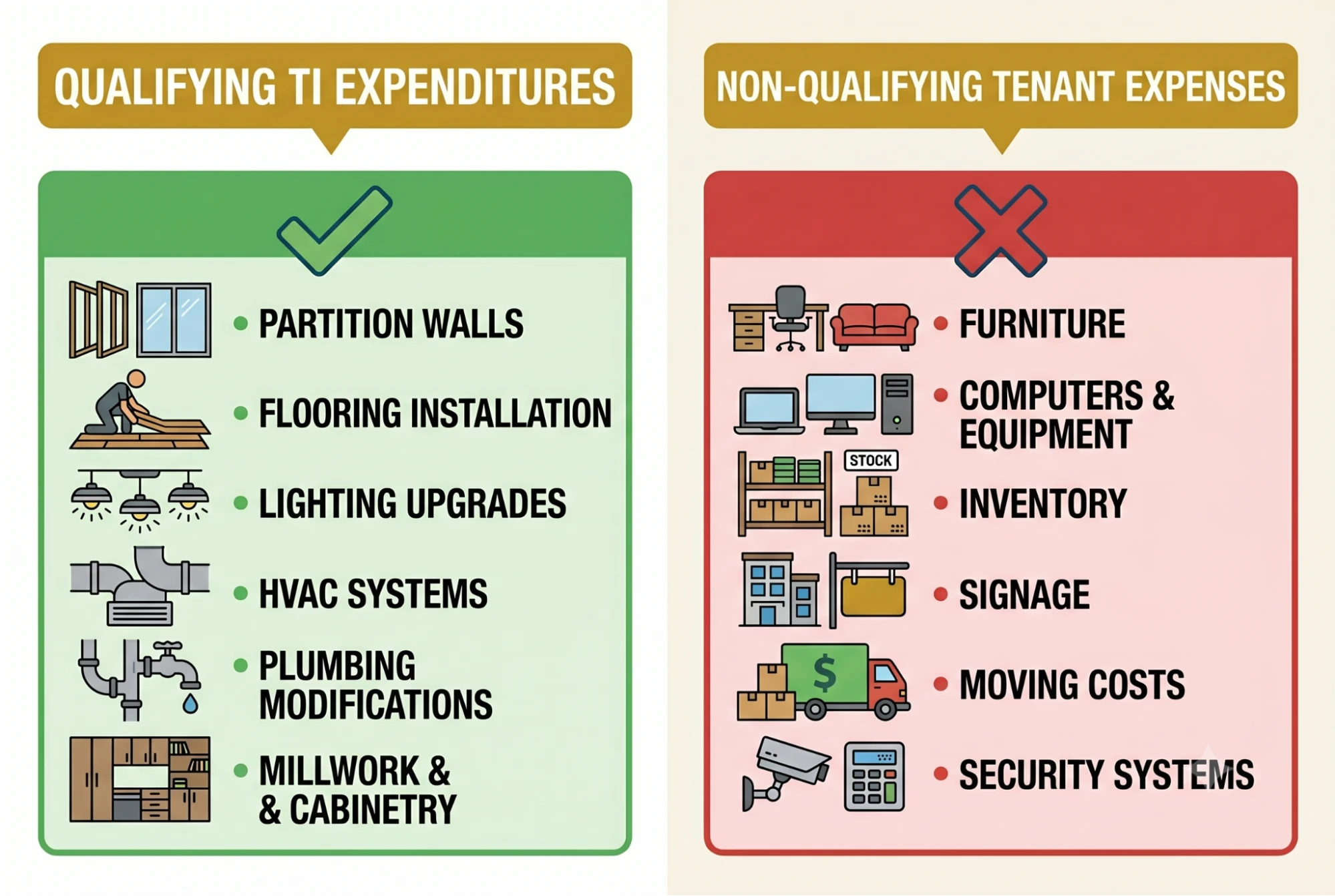
Image Source: Gemini 2026
How to Negotiate a Tenant Improvement Allowance
Negotiate your TIA in parallel with your construction scope, not after it. Without a preliminary build-out estimate, you're negotiating blind, and you may accept an allowance that falls well short of your actual construction costs.
A clear scope developed early with your contractor gives you the numbers to negotiate effectively. Be ready to provide financial documentation, such as balance sheets, especially for larger fit-out projects. Request a longer lease term to increase the allowance a landlord offers. Longer commitments reduce their risk.
FAQs About TI Allowances for Commercial Real Estate
Key Takeaways
- A tenant improvement allowance (TIA) is a landlord-provided fund that covers construction costs for fitting out a leased commercial space
- TI allowances in Ontario typically range from $15 to $60 per square foot, with higher allowances tied to longer lease terms
- Qualifying costs include framing, flooring, HVAC systems, electrical systems, and plumbing. Furniture, equipment, and moving costs are not covered
- Unused TIA funds revert to the landlord. The allowance is not a cash bonus for the tenant
- A higher TI allowance often comes with a higher base rent, so model the total lease cost before negotiating
- Scope your build-out with a contractor before entering lease negotiations, so you know exactly what allowance to ask for
Scope Your Fit-Out Before You Sign
Ready to scope your fit-out before you sign? HI-Performance Construction is a commercial and industrial interior contractor serving the GTA with 20+ years of experience, managing commercial tenant improvement projects from start to finish, from drawings and permits through to completion.
Whether it's a retail space, office, or medical clinic, we scope the work before you finalize your lease, so you know exactly what your TI allowance needs to cover.
Reach out today to get started.