Design Build vs General Contractor: What's the Difference?
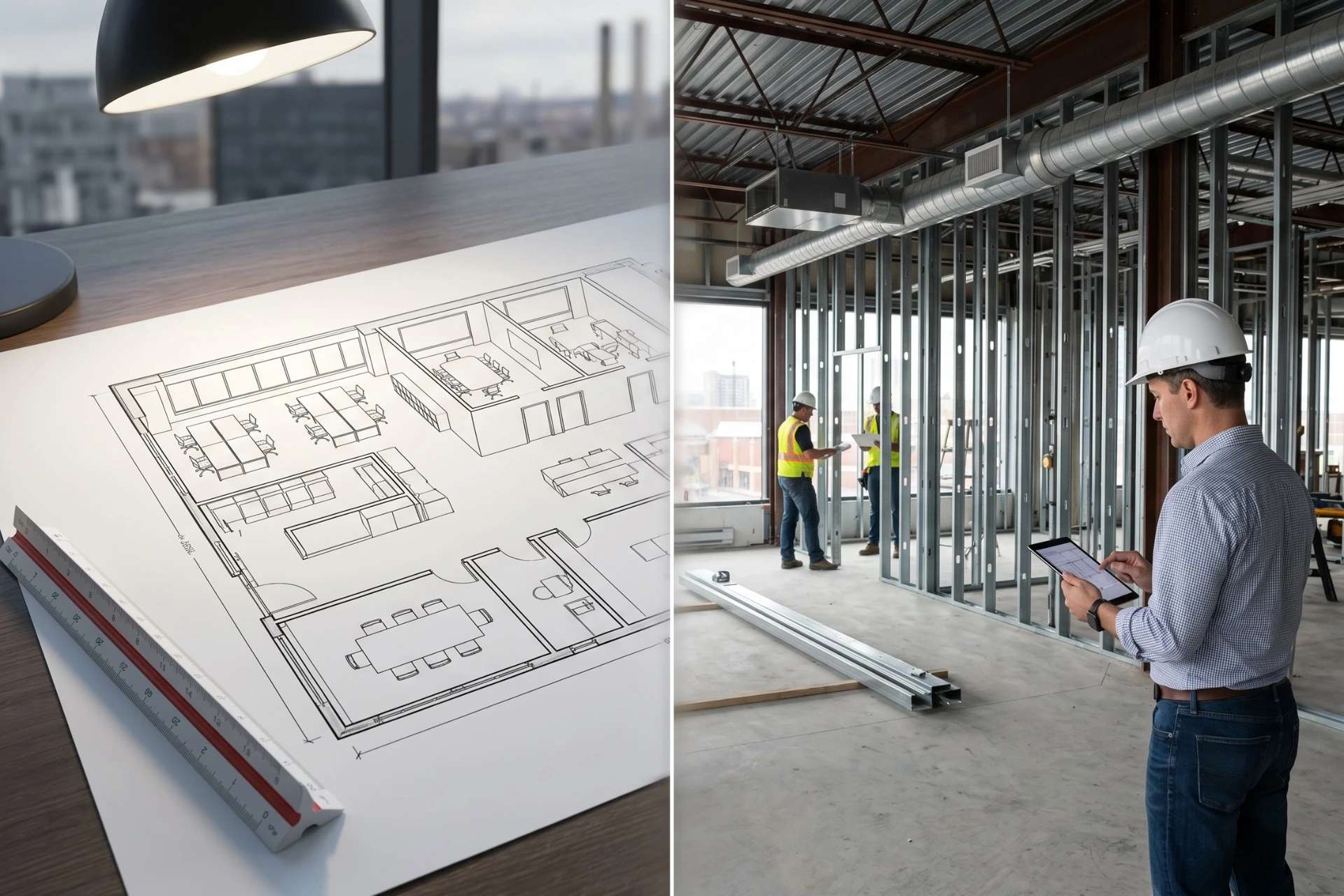
Design-build and general contractor delivery models differ in how they structure the design and construction phases. Design-build keeps both under a single contract and team, offering faster project timelines, early budget certainty, and reduced risk. Traditional construction separates design and construction, placing coordination on the project owner.
When you're planning a commercial renovation, warehouse upgrade, or franchise fit-out, the delivery model you choose shapes everything that follows.
At HI-Performance Construction, we see budget clarity, project timelines, communication, and accountability play out differently depending on whether a client chooses a design-build firm or hires a general contractor through a traditional construction process.
Understanding the distinction before your next project begins can save you time, money, and significant frustration.
What is Design-Build Construction?
Design-build is a project delivery method where one entity manages both design and construction under a single contract, working as an integrated team from concept through completion. The design-build model covers drawings, permits, project management, and construction, so there's no handoff gap between what's planned and what's built.
Design-build projects are delivered up to 102% faster than traditional design-bid-build projects, because overlapping design and construction phases compress the overall schedule.
Cost estimates are also locked in early, giving the project owner cost certainty before construction begins.
The Role of the Design Build Firm
A design-build firm assesses your project early, flagging budget constraints and site conditions before they become expensive problems. The design-build team remains accountable for the finished project from start to finish, leading to fewer disputes and a smoother process.
For commercial clients managing tight deadlines and fixed operational requirements, like a franchise opening on a set date or a warehouse that can’t sit idle during an upgrade, that integrated approach means fewer scheduling gaps and one team accountable if something slips.
What’s a General Contractor?
A general contractor oversees construction based on plans from a separate design firm. This traditional approach, called design-bid-build, splits design and construction between different parties under separate contracts, with the project owner coordinating between them.
Design must be fully complete before the construction project goes to competitive bidding. Contractors submit bids on the same plans, and construction starts only after one is selected, a linear sequence that runs longer than the design-build method.
How the Traditional Construction Model Distributes Risk
The project owner assumes most of the risk in traditional construction. Because design and construction teams work independently, miscommunication between them becomes the owner's problem, and cost overruns are common when crews hit real-world site conditions that the design phase didn’t anticipate.
Separating design from construction also means no single point of accountability. The general contractor builds to the plans they're given, so if those plans have gaps, resolving them mid-build costs more and takes longer.
Design Build vs General Contractor: Key Differences
Design-build and general contractor models diverge most on accountability, budget control, timelines, and communication, the factors that matter most when weighing design and build vs general contractor for a commercial project.
Accountability and Risk
One firm carries accountability for the entire project in design-build. In traditional design-bid-build, accountability splits across multiple parties under separate contracts, raising the risk of disputes.
Budget Control
Design-build builds budget control into the process itself: firms calculate cost estimates during design, before plans are finalized, helping the project owner avoid budget surprises that often surface once traditional bidding begins.
DBIA research shows design-build projects average 3.8% less cost growth than design-bid-build projects.
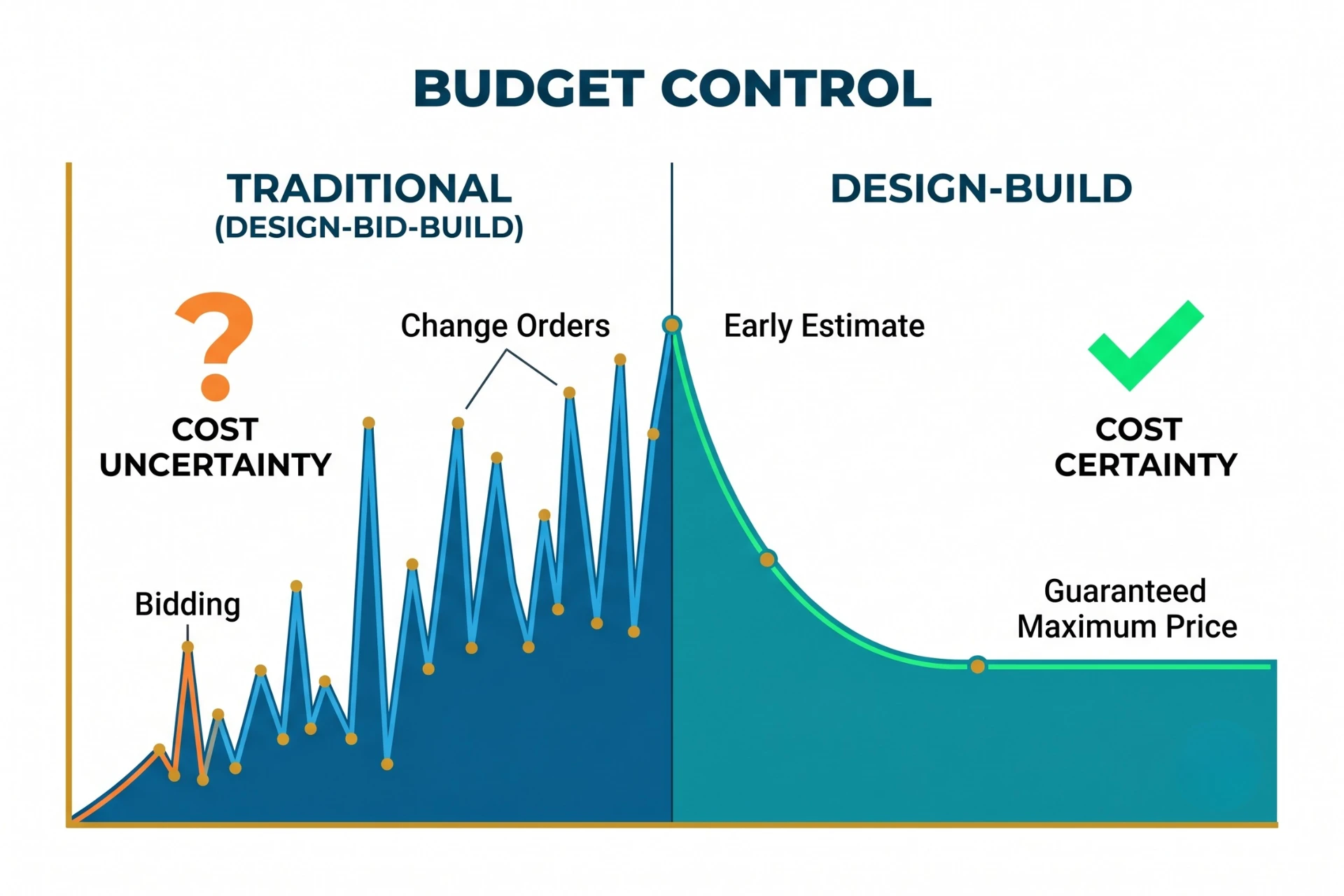
Image Source: Gemini 2026
Project Timelines
In the design-build model, the overall construction schedule compresses because design and construction phases overlap. Traditional construction runs these phases sequentially instead, adding time upfront since design must be complete before a general contractor comes on board.
Communication
The design-build team provides the project owner with a single contract, a single point of contact, and a single team accountable for the finished project. In the traditional model, the project owner often coordinates between separate design and construction teams, adding complexity and raising the risk of miscommunication.
Which Model Is Right for Your Commercial Project?
The design-build approach offers a more controlled, predictable path for VPs, facility managers, franchise operators, and business owners who need a commercial project delivered on time and within budget.
The construction industry has a well-known reputation for delays, cost overruns, and communication breakdowns. Design-build directly addresses all three by keeping design and construction under one team.
That said, design-bid-build can still make sense when architectural plans are already finalized, and the project just needs a qualified general contractor to execute them. Competitive bidding across multiple bids can also offer price comparison advantages.
The right choice depends on your timeline, your internal coordination capacity, and the cost certainty you need before construction begins.
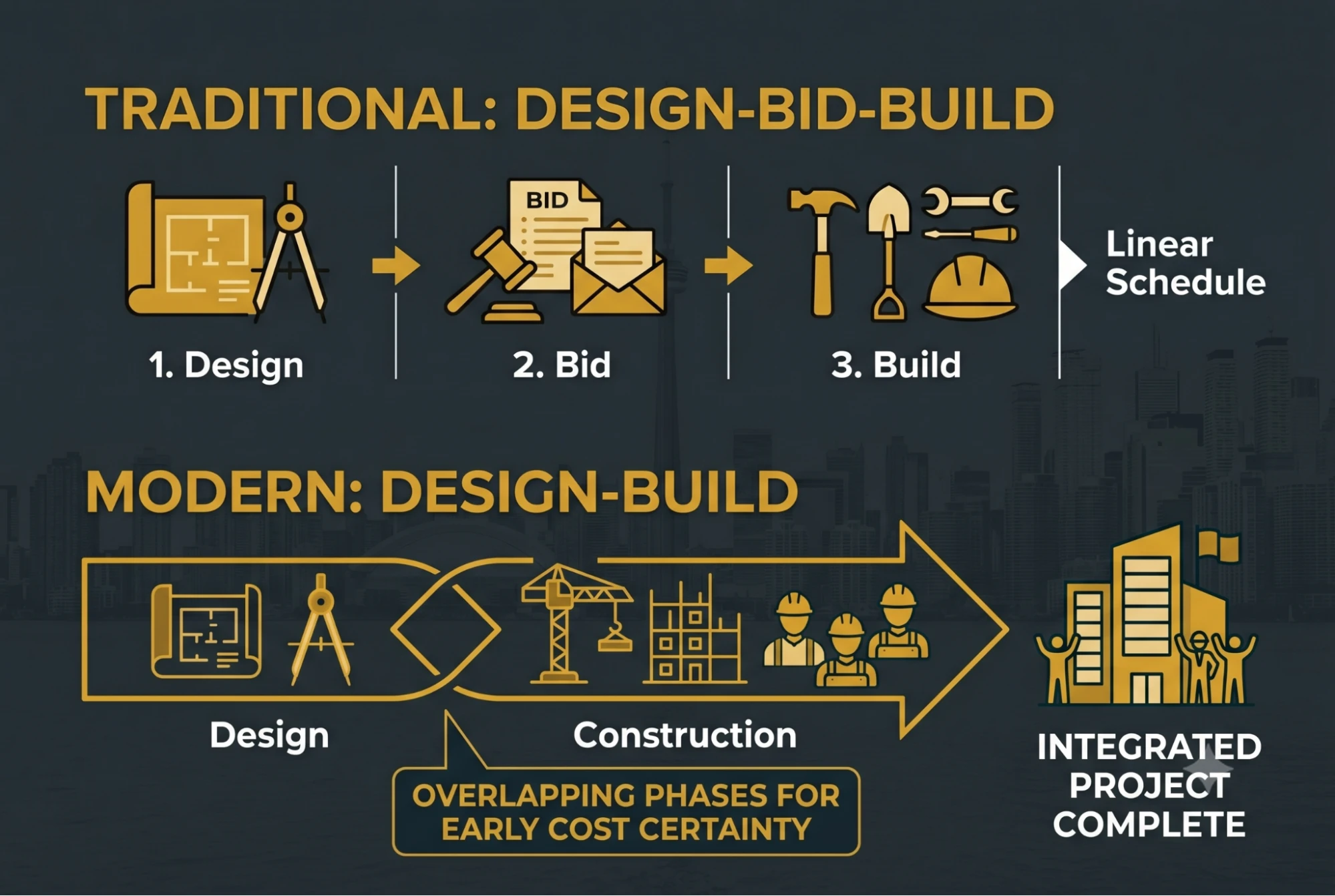
Image Source: Gemini 2026
FAQs About Design-Build vs General Contractor
Key Takeaways
- Design-build combines design and construction under one contract, giving the project owner a single point of accountability from start to finish.
- Traditional construction splits design and construction into separate contracts, leaving coordination to the project owner.
- Design-build firms provide early cost estimates, reducing the risk of budget surprises and cost overruns.
- Design-build compresses the schedule by overlapping design and construction phases, delivering projects faster than design-bid-build.
- The project owner assumes most of the risk in traditional construction, managing multiple parties under separate contracts.
- The right delivery model depends on your project timelines, budget control needs, and internal coordination capacity.
Start Your Commercial Project the Right Way
HI-Performance Construction manages commercial projects from start to finish, from drawings and permits through to final construction, across the Greater Toronto Area. Whether you're weighing design-build vs general contractor for a warehouse build-out, office renovation, medical clinic, or retail fit-out, one team handles every phase under a single contract.
Contact HI-Performance Construction, and let’s discuss your next project.